NCCAA board review · for SAAs & CAAs
Make your next
Make your next
study step obvious.
1,500+ clinician-reviewed questions — a rationale for every answer, a verifiable public source, and progress tracking, plus a 100% Pass Guarantee.
CAA-specific blueprint
Clinician-reviewed
Cited explanations
01Try 3 real questionsNo account required
02Find your next focus25 questions free with an account
03Unlock your full plan$100 once, lifetime access
JK Founded and clinically reviewed by Jake Karel, CAA
Founded and clinically reviewed by Jake Karel, CAA
All 6 NCCAA domains · Free to start, then a one-time $100 — no subscription, ever.
MACPrep
Tutor mode
Q4 / 10
PHARMACOLOGY · LOCAL ANESTHETICS
Minutes after a large-volume regional block, a patient reports perioral numbness, tinnitus, and a metallic taste. What is the most appropriate next step?
A Continue the block and reassess in 5 minutes
B Stop the injection and prepare 20% lipid emulsion
✓Correct. Perioral numbness, tinnitus, and a metallic taste are early signs of local anesthetic systemic toxicity — stop the injection and start 20% lipid emulsion.
C Administer a beta-blocker for the tinnitus
D Increase the local anesthetic dose
Cited source · ASRA Practice Advisory on LAST (2018)
100% Pass Guarantee
1,500+
Cited questions & growing
6
NCCAA domains, fully mapped
$100
One-time — no subscription
100%
Pass Guarantee, or money back
Public sources & citations
Reviewed by a practicing CAA
Reasoning for every choice
Study by specialty
Server-graded & secure
The complete NCCAA learning system
Not a quiz add-on. A system built around the whole exam.
Build the knowledge, understand every choice, follow an adaptive plan, rehearse the real testing window, and carry the same sourced specialty work into clinical rotations.
1,500+ sourced questionsLearn
Adaptive exam roadmapPlan
180-question mock examsRehearse
Rotation-focused study packsApply
Start with what you need
A clear path for certification, CDQ review, and faculty support.
01
NCCAA board prep
See the complete learning system for CAAs and SAAs.
02
Free practice questions
Answer three cited questions before creating an account.
03
CAA CDQ review
Refresh lower frequency knowledge with lifetime account access.
04
For AA programs
Coordinate cohort access with clear learner privacy boundaries.
From SAAs & CAAs
Read all reviews →
Trusted by people sitting the same boards.
Try it — no sign-up
Answer 3 real questions right now.
Not just the right answer — why each option is right or wrong, with a citation you can verify and a clinician's sign-off.
MACPrep
Sample questions
Loading a sample question…
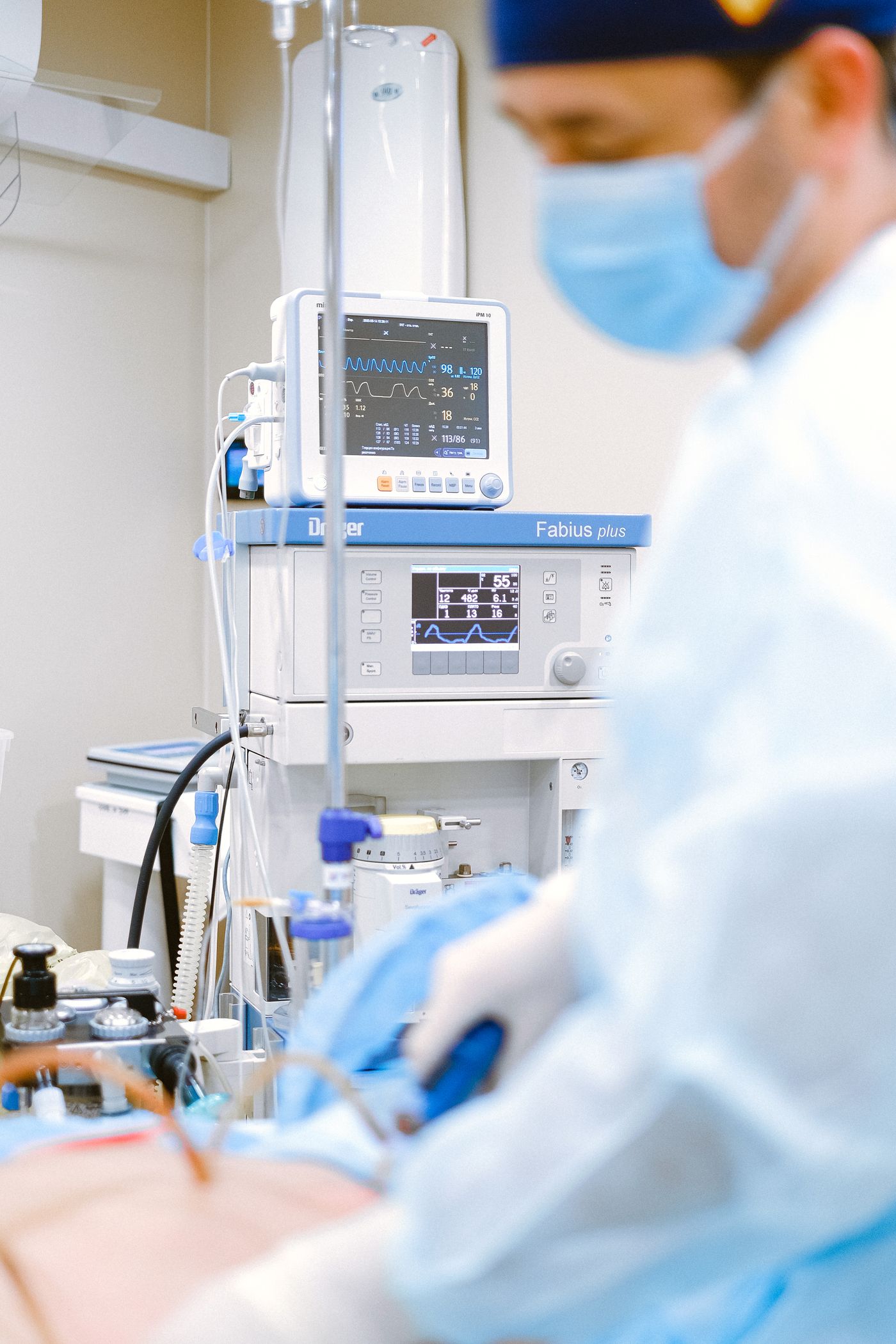
The room you’re training for.Every question maps to a real intraoperative decision.
Liked those? Keep going — free.
No card. Start with free resources for your current stage, from applying to AA school through board preparation.
Free applicant planning tools
25 sourced board-review questions once school begins
Your account grows with your AA journey
Welcome back
Why MACPrep
Built to teach, not just test.
Every question gives you three things most banks don't — plus the tools to study the way the exam is actually scored.
Mapped to the blueprint
Every question is tagged to the six NCCAA domains and a clinical subtopic, so you study the way the exam is scored.
Reasoning, not just answers
See why the correct answer is right and why each distractor is wrong — a teaching explanation with a citation to a publicly accessible source.
Prepare by rotation
Use sourced Pediatric, Obstetric, Cardiac, Regional, Airway, Thoracic, Vascular, and Critical Events packs before a clinical rotation or as focused board review.
Server-graded & secure
Answers are graded on the server and never exposed before you respond, so your practice is honest and the bank stays protected.
Track your practice
Your dashboard tracks observed accuracy and a directional practice estimate by domain, so you can see where to focus next. It is not a prediction of exam performance.
One-time price
Full access for a single $100 payment — no recurring subscription, processed securely by Stripe. Lifetime access.
MACPrep
Dashboard
Welcome back, Jordan
Pick up where you left off — or start a focused set.
Practice estimate
On track
Accuracy, last 7 active days
Study activity · 6 days this month
1,500+
Questions unlocked
6 / 6
Domains in progress
Your command center
See where your practice stands.
MACPrep turns every session into a clearer study signal. Review observed accuracy and a directional practice estimate by domain, build consistency with the activity calendar, and return to missed or weaker areas.
- A directional practice estimate that updates by NCCAA domain as you study.
- A Question of the Day and activity calendar to build the habit.
- Smart Review surfaces what you missed and your weakest areas.
- Flag and bookmark anything to revisit in your Notebook.
How it works
From your first question to focused practice.
Four simple steps — and your free demo progress carries right over.
1
Create your account
Free to start, no card required — and your demo progress carries right over.
2
Pick an area & length
Choose a domain, specialty, or rotation pack — from a five-question daily drill to a full block.
3
Practice with feedback
Answer, then read the reasoning for every choice with a citation you can verify.
4
Track & upgrade
Track your observed practice by domain; unlock the full bank for a one-time $100.
JK
Who writes these questions
“I built MACPrep because board prep for our field was either outdated, uncited, or overpriced. Every published question is clinically reviewed and source linked, with a rationale for every answer choice. It's the resource I wish I'd had for my own boards, and the tool I use to teach the SAAs I precept between cases.”
— Jake Karel, CAA · Founder, MACPrep LLC
Simple pricing
One price. No subscription. Ever.
Start free, upgrade once. Backed by a 100% Pass Guarantee and a 48-hour, no-questions-asked refund.
FREE
$0
Get started and try the platform.
- 25 free questions (a recommended session)
- Full explanations & sources
- One guided recommended session
- Premium tools unlock with full access
Most popular
PREMIUM
$100 one-time
Full access, no subscription.
- The entire question bank
- Every domain & specialty
- All rationales & cited sources
- Lifetime access
100% Pass Guarantee. Don't pass the NCCAA boards? Get 100% of your direct web purchase price back.
Have a class or cohort code? It's not a checkout code — redeem it on your dashboard →
The 100% Pass Guarantee
If you purchased premium directly from MACPrep on the web, study with MACPrep and sit the NCCAA boards. If you don't pass, email your proof of purchase and official score report to support@macprep.org within 90 days of the exam, and we'll refund your direct web purchase price. The guarantee does not apply to App Store or Google Play purchases, vouchers, program grants, or complimentary access.

Built by a CAA, for the boards
Study for the room you’ll actually be in.
Every published question is clinically reviewed and source linked, with reasoning for every choice.
Start free in 30 seconds.
No card required. Try a real slice of the bank free — then unlock everything for a one-time $100, backed by the Pass Guarantee.
1,500+ cited questions · all 6 NCCAA domains · one-time $100 · 100% Pass Guarantee


Normal lab values
Reference adult ranges, units as commonly reported.
Arterial blood gas
| pH | 7.35–7.45 |
| PaCO₂ | 35–45 mmHg |
| PaO₂ | 80–100 mmHg |
| HCO₃⁻ | 22–26 mEq/L |
| Base excess | −2 to +2 |
| SaO₂ | 95–100% |
Electrolytes
| Na⁺ | 135–145 mEq/L |
| K⁺ | 3.5–5.0 mEq/L |
| Cl⁻ | 98–106 mEq/L |
| CO₂ | 22–28 mEq/L |
| Ca²⁺ (total) | 8.5–10.5 mg/dL |
| Ca²⁺ (ionized) | 1.1–1.35 mmol/L |
| Mg²⁺ | 1.7–2.2 mEq/L |
| PO₄ | 2.5–4.5 mEq/L |
Renal & glucose
| BUN | 7–20 mg/dL |
| Creatinine | 0.6–1.2 mg/dL |
| Glucose | 70–110 mg/dL |
| Lactate | 0.5–2.2 mmol/L |
Hematology
| Hgb | 12–17 g/dL |
| Hct | 36–50% |
| Platelets | 150–400 ×10⁹/L |
| WBC | 4–11 ×10⁹/L |
Coagulation
| PT | 11–13.5 s |
| INR | 0.8–1.1 |
| aPTT | 25–35 s |
| Fibrinogen | 200–400 mg/dL |
Other
| Albumin | 3.5–5.0 g/dL |
| Total protein | 6–8 g/dL |
| Ca²⁺ correction | +0.8 mg/dL per 1 g/dL albumin drop |
Calculator
Quick conversions
cm⇄in
kg⇄lb
°C⇄°F
What's new
Mock exam
Simulate the real thing
Built to match the real NCCAA exam: 180 questions timed to the board's 220 minutes (two 110-minute blocks of 90). Sampled across all six NCCAA domains in proportion to the bank, with a per-domain score breakdown at the end.
Focused quiz
Specialty
How many questions?